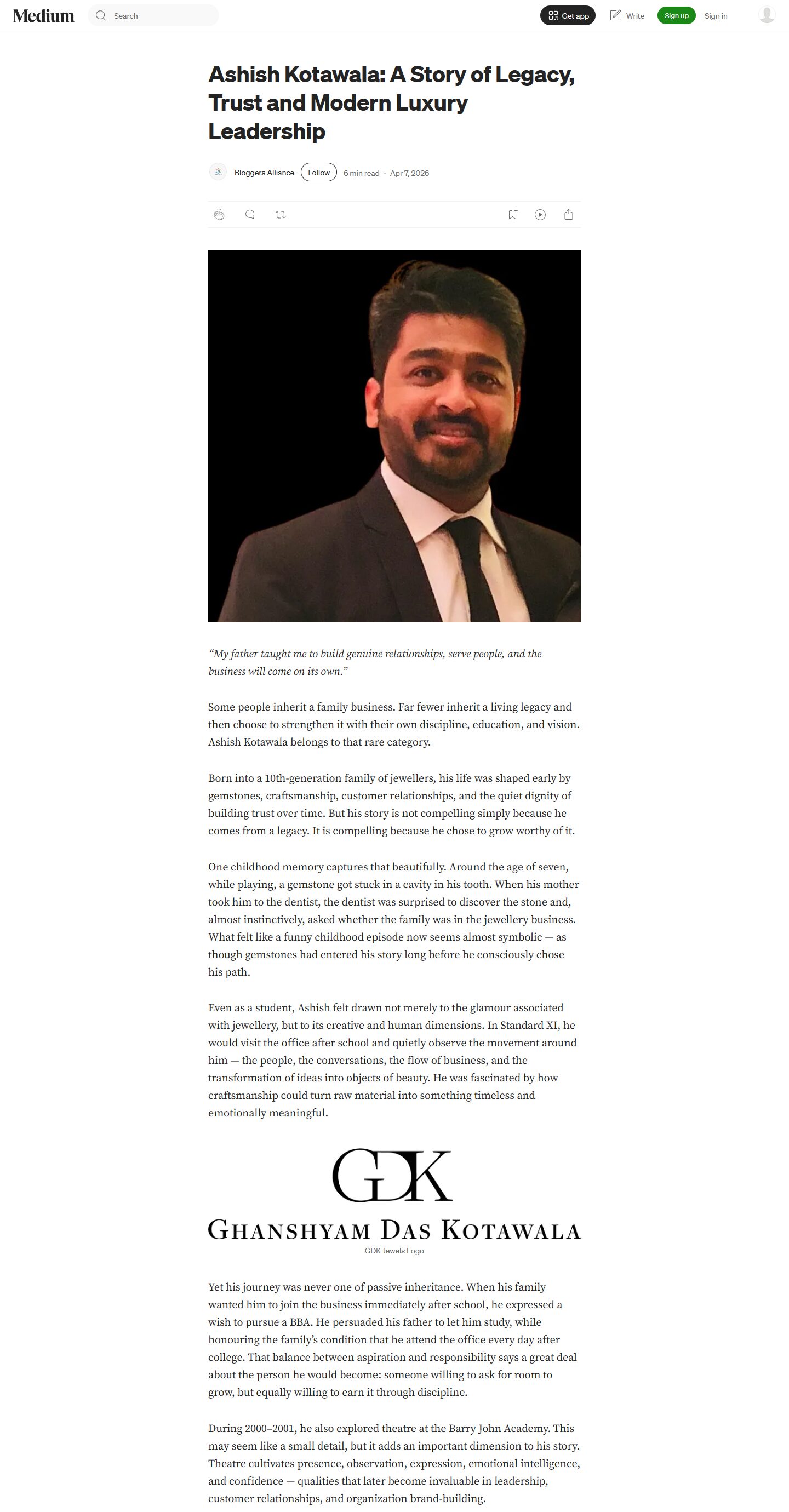
Jeweller · Gemologist · Private advisor

Beyond the certificate,there is judgement.

Ashish Kotawala helps families and collectors make significant gemstone and jewellery decisions - with the perspective of a tenth-generation jeweller and the rigour of a GIA Graduate Gemologist.

10th
generation jeweller
GIA
Graduate Gemologist
22+
years in the craft
Ashish Kotawala with an emerald and diamond necklace
“A jewel is memory, identity and legacy made tangible.”

The Gemologist’s Eye

A report tells you what it is.
The eye tells you what it could become.

The finest jewellery decisions begin where grading reports end: with colour that moves, proportion that feels inevitable, and a clear understanding of what gives a stone character.

Ashish brings together inherited instinct, formal gemological training and more than two decades of commercial experience. The purpose is not to sell the largest stone. It is to recognise the right one - and to say no when the decision does not stand up.

Discover Ashish’s perspective

About Ashish Kotawala

A lifetime of looking closely.

For Ashish Kotawala, the fascination begins the moment a parcel of gemstones is opened. He studies the colour, turns a stone towards the light and starts imagining what it could become, and who might love wearing it.

Growing up in a jewellery family, Ashish spent time at the office after school, drawn to design and the making of a jewel. His father’s lessons shaped his approach to the people around it: explain what you are selling, make the disclosures and give relationships the time they deserve.

Today, Ashish brings that same attention to his work as a jeweller and gemstone advisor. He helps clients explore their preferences, compare possibilities and understand the qualities behind a recommendation. Colour, cut, character, treatment information and price all deserve a clear conversation.

His creative process is equally considered. He works closely with designers and karigars, refining proportions, settings and finishes around the individual stone. A striking emerald may call for a delicate necklace. A small change in an arrangement may make the whole piece feel right.

Ashish has a definite personal taste: classic, expressive and full of presence. His advice begins with yours. Whether you are choosing a milestone jewel or discovering gemstones for the first time, his aim is to help you find something you understand, admire and enjoy wearing.

Beauty is in the stone.
Ashish Kotawala

A considered eye

Attention to colour, light and proportion, supported by the verification a purchase requires.

An open conversation

Space to ask questions, compare alternatives and understand the reasons behind a recommendation.

A personal connection

Jewellery chosen around your taste, your occasion and the pleasure it brings you.

The eye at work

Beauty is not a specification.
It is a response.

A stone earns attention through movement, colour, proportion and presence. This short study in emeralds is a reminder that jewellery must ultimately be experienced - not merely described.

See the journey behind the eye
Emerald and diamond bracelet · GDK Jewels

Private jewellery advisory

Clarity for decisions of lasting significance.

Thoughtful, discreet counsel for acquiring, evaluating, creating or reimagining important gemstones and jewellery.

How the advisory works
01

Acquire with discernment

Assess beauty, rarity, treatment, provenance, market context and fit before committing.

02

Create with intention

Translate a stone, story or milestone into jewellery that feels personal rather than merely impressive.

03

Preserve a legacy

Evaluate, document and thoughtfully reimagine jewellery intended to move across generations.

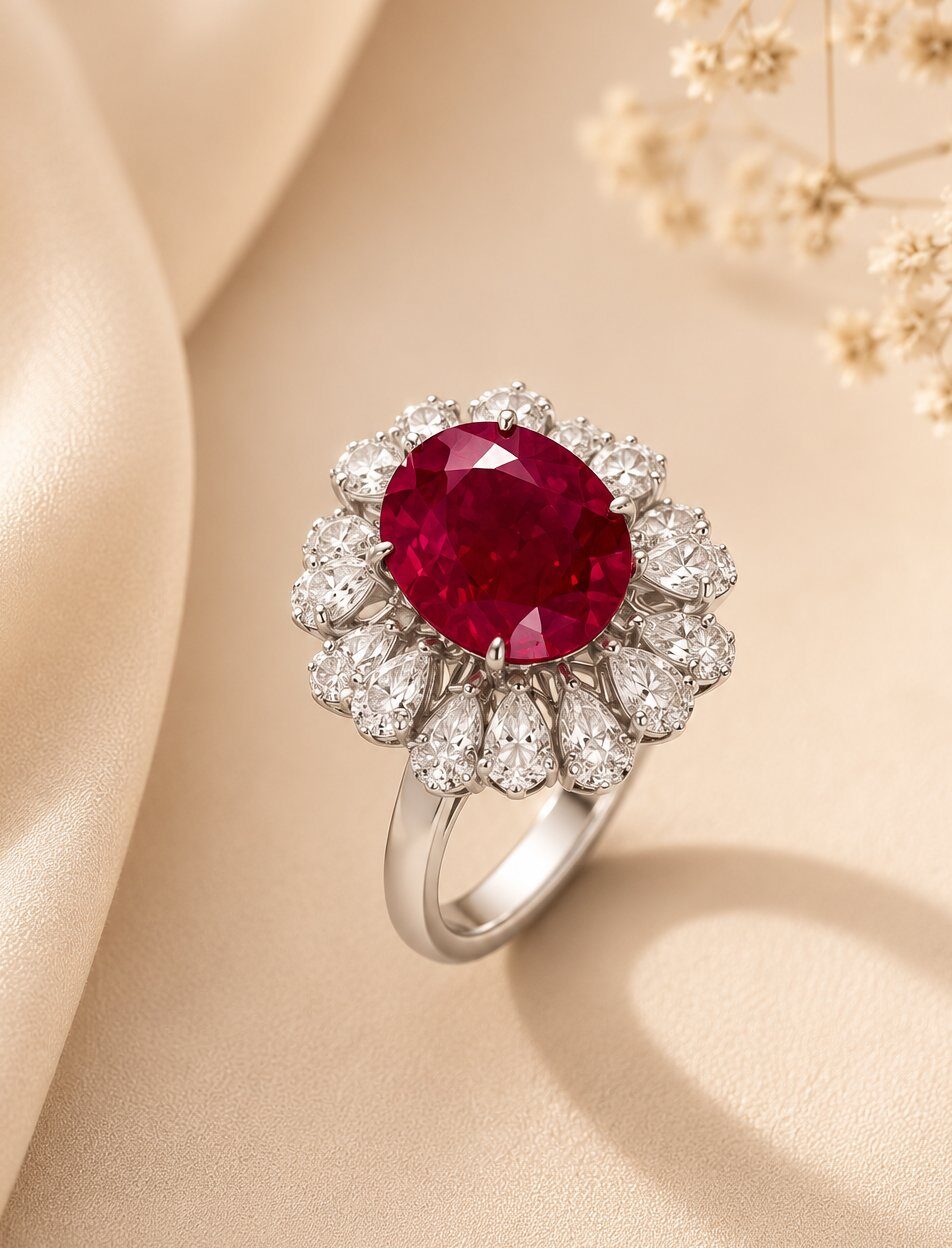
A ruby and diamond ring

A note on integrity

Sometimes the best jewel is the one you advise a client not to buy.

A client once considered a 55-carat diamond. Its scale was extraordinary. The decision was not.

Advising against it was simple: the stone did not justify the commitment for that client. Real counsel protects the relationship before it protects the transaction.

Read the case note

Learning

Notes from the bench.

Short notes on gemstones, craft and the people behind a jewel, written to help you look a little closer.

A Closer Look at Beauty,
Craft and Choice

Frameworks, essays and education for those who wish to engage with fine jewellery and luxury with real depth - not catalogue knowledge.

Subscribe to the newsletter

A Life Around Gemstones

The lessons Ashish learnt in a family of jewellers, where curiosity, craftsmanship and relationships shaped his approach.

Read →

The Person Before the Purchase

Understanding your taste, your occasion and what you value is where a thoughtful gemstone recommendation begins.

Read →

Beauty Is in the Stone

An exploration of colour, light and character - and why every gemstone deserves a closer look beyond its origin or reputation.

Read →

The Report and the Eye

How laboratory verification and experienced visual judgment work together to help you understand what you are choosing.

Read →

When the Right Advice Is to Wait

Why a considered purchase sometimes means pausing, comparing alternatives and looking beyond the excitement of size or price.

Read →

Let the Gemstone Guide the Design

From the first spark of an idea to the final setting, discover how a stone’s character shapes the jewel it becomes.

Read →

Heritage, knowledge
& quiet authority

"The finest jewellery counsel comes from understanding what a gem truly is - not just what it costs."

Ashish Kotawala is the Managing Director of GDK Jewels, born into a ten-generation tradition of jewellery-making in India. His family's legacy spans close to two centuries - a lineage of master craftsmen, gemstone traders and trusted advisors to India's most discerning families.

A GIA Graduate Gemologist by credential and an entrepreneur by conviction, Ashish bridges the ancient grammar of gems with the contemporary language of luxury strategy, brand identity and family governance. He advises HNI and UHNI clients, collectors, jewellery entrepreneurs and family offices - not as a salesman, but as trusted counsel.

Through Ashish Kotawala Advisory, he shares frameworks, perspectives and personal guidance developed over decades at the intersection of craft, commerce and connoisseurship.

  • GIA Graduate Gemologist - Gemological Institute of America
  • Managing Director, GDK Jewels, New Delhi
  • Founder, Kotawala Fine Jewels
  • Co-Founder, Xtraordinary Desserts
  • 200+ years of family jewellery heritage
  • Speaker - luxury, jewellery and entrepreneurship forums

Ten generations,
one unbroken thread

The Kotawala name has been synonymous with fine jewellery in India for close to two centuries. This is a story of craft, continuity and contemporary reinvention.

c. 1840s
The Kotawala Legacy Begins
The first generation of Kotawala jewellers establishes a tradition of fine craftsmanship and gemstone mastery in India.
1990s
GDK Jewels - A New Chapter
Ashish's generation brings contemporary enterprise to the family's centuries-old gemstone expertise, establishing GDK Jewels as a formal business.
2000s
GIA Graduate Gemologist
Ashish earns his Graduate Gemologist diploma from the Gemological Institute of America - adding rigorous international certification to inherited knowledge.
2010s
Expanding Beyond Jewellery
Co-founds Xtraordinary Desserts, demonstrates entrepreneurial breadth. Begins speaking and advisory engagements across luxury and entrepreneurship forums.
2020s
Ashish Kotawala Advisory
Formally establishes his personal advisory platform - bringing together gemological expertise, luxury strategy and entrepreneurial mentorship for HNI families, collectors and institutions.

Features, panels
& conversations

Ashish speaks and writes on fine jewellery, gemstones, luxury strategy and entrepreneurship - contributing to India's leading publications and forums.

ET Wedding Leaders Awards 2024
Celebrating Wedding Excellence Ashish Kotawala - ET Wedding Leaders Awards 2024
Read More →
The Jewelry Magazine (TJM Media Pvt. Ltd.) 2020
A vision driven by evolving designs, modern sensibilities, and timeless craftsmanship.
Read More →
IIJS Show Update 2022
A Leading Voice in the Jewellery Industry, Creating Meaningful Impact Through Business Excellence and Industry Leadership
Read More →
Indian Jeweller - Advertorial: Keeping Up With The Times 2022
Carrying Forward a Legacy of Jewellery Excellence Through Innovation, Craftsmanship & Vision
Read More →
Bloggers Alliance (Medium)
Where Generational Legacy Meets Modern Luxury Leadership - homepage
Read More →
Entrepreneur India
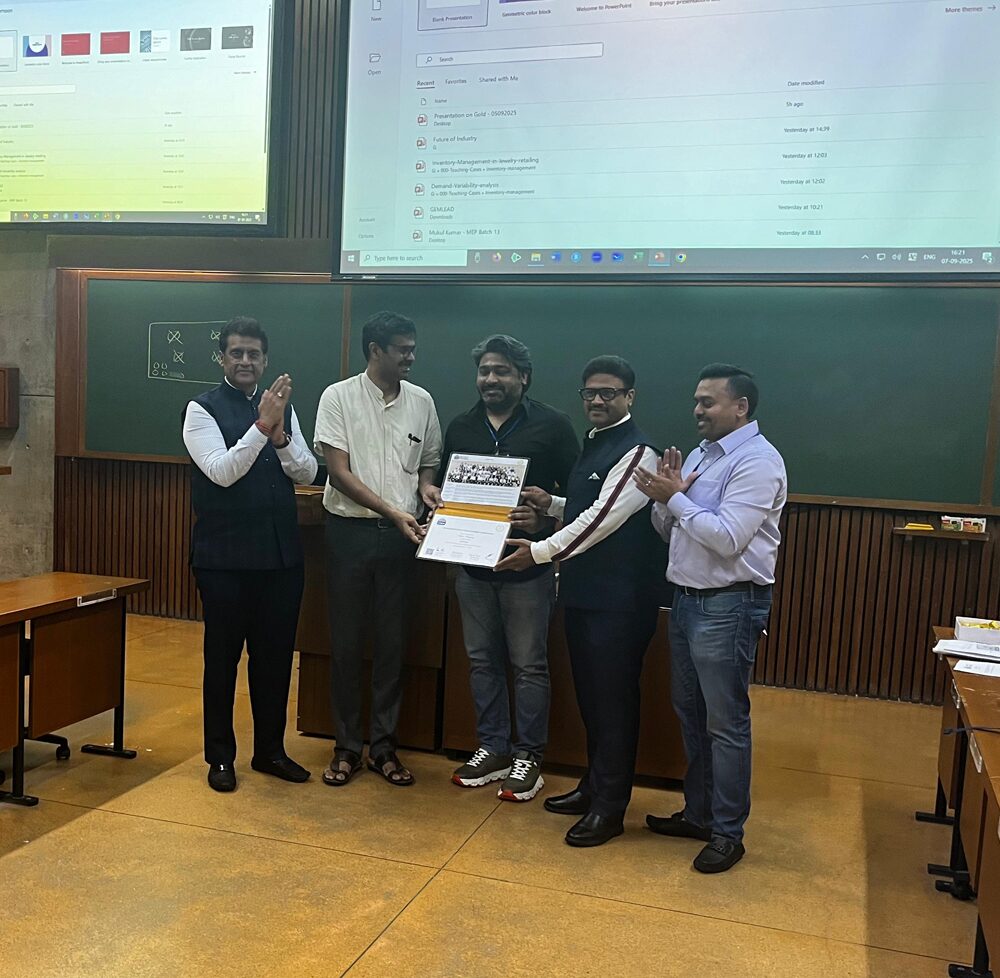
Gemlead Programm @ IIMA
Read More →

Begin a conversation

A significant decision deserves an informed eye.

Private advisory, speaking invitations and thoughtful collaborations are welcome.

Start a conversation

Ashish Kotawala

Recognised Among North India’s Wedding Industry Leaders

Ashish Kotawala has been recognised as one of the prominent names in the wedding and events industry, celebrated for his contribution towards creating memorable wedding experiences and setting benchmarks in the evolving landscape of celebrations.

With a vision focused on creativity, innovation, and excellence, Ashish has built a reputation for delivering distinctive experiences that blend thoughtful design, flawless execution, and a deep understanding of modern wedding expectations.

His recognition at the ET Wedding Leaders Awards 2024 - North highlights his journey as a wedding professional who continues to inspire the industry through dedication, creativity, and a commitment to redefining celebrations.

Ashish Kotawala at ET Wedding Leaders Awards 2024

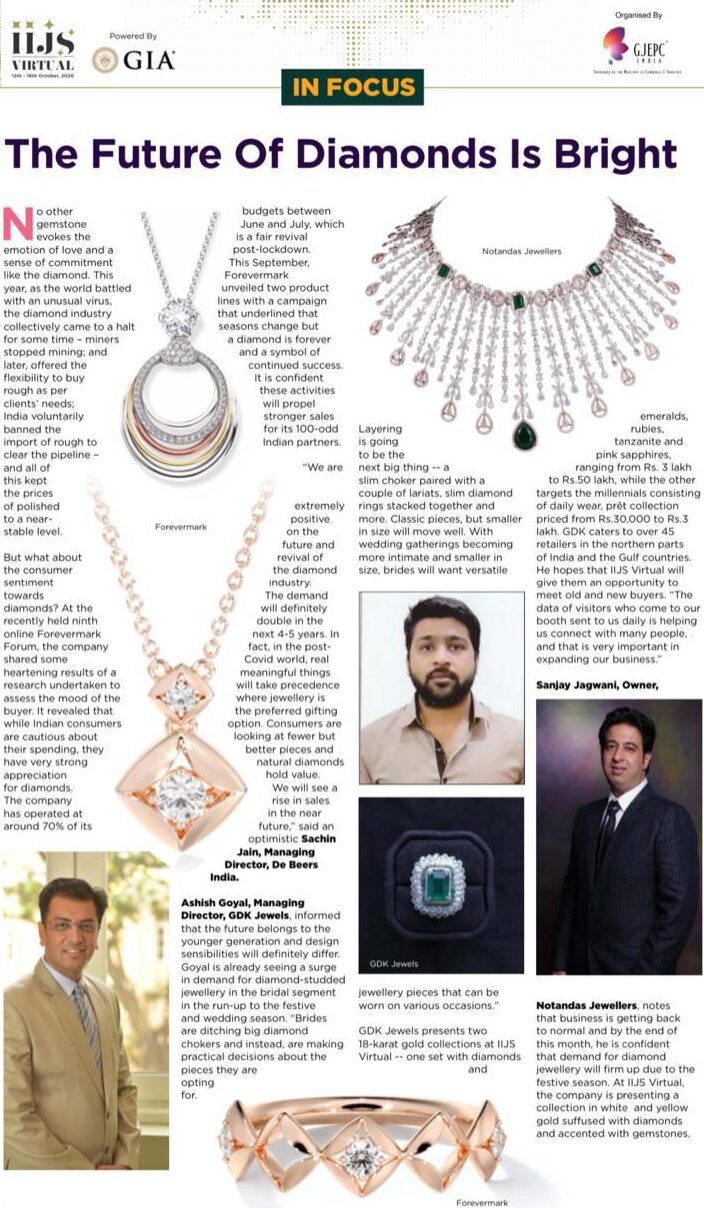
Ashish Goyal - Managing Director, GDK Jewels

Embracing the Future of Diamond Jewellery

Ashish Goyal shares that the future of the diamond industry belongs to the younger generation, with evolving preferences and changing design sensibilities shaping the next phase of jewellery trends.

He highlights a growing demand for diamond-studded jewellery, especially in the bridal segment during the festive and wedding season. According to him, modern brides are moving away from traditional heavy diamond chokers and choosing more practical, versatile pieces that can be styled across occasions.

He believes contemporary jewellery trends will focus on elegant designs such as layered jewellery, slim chokers, stackable diamond rings, and timeless pieces that offer both style and flexibility.

Embracing the Future of Diamond Jewellery

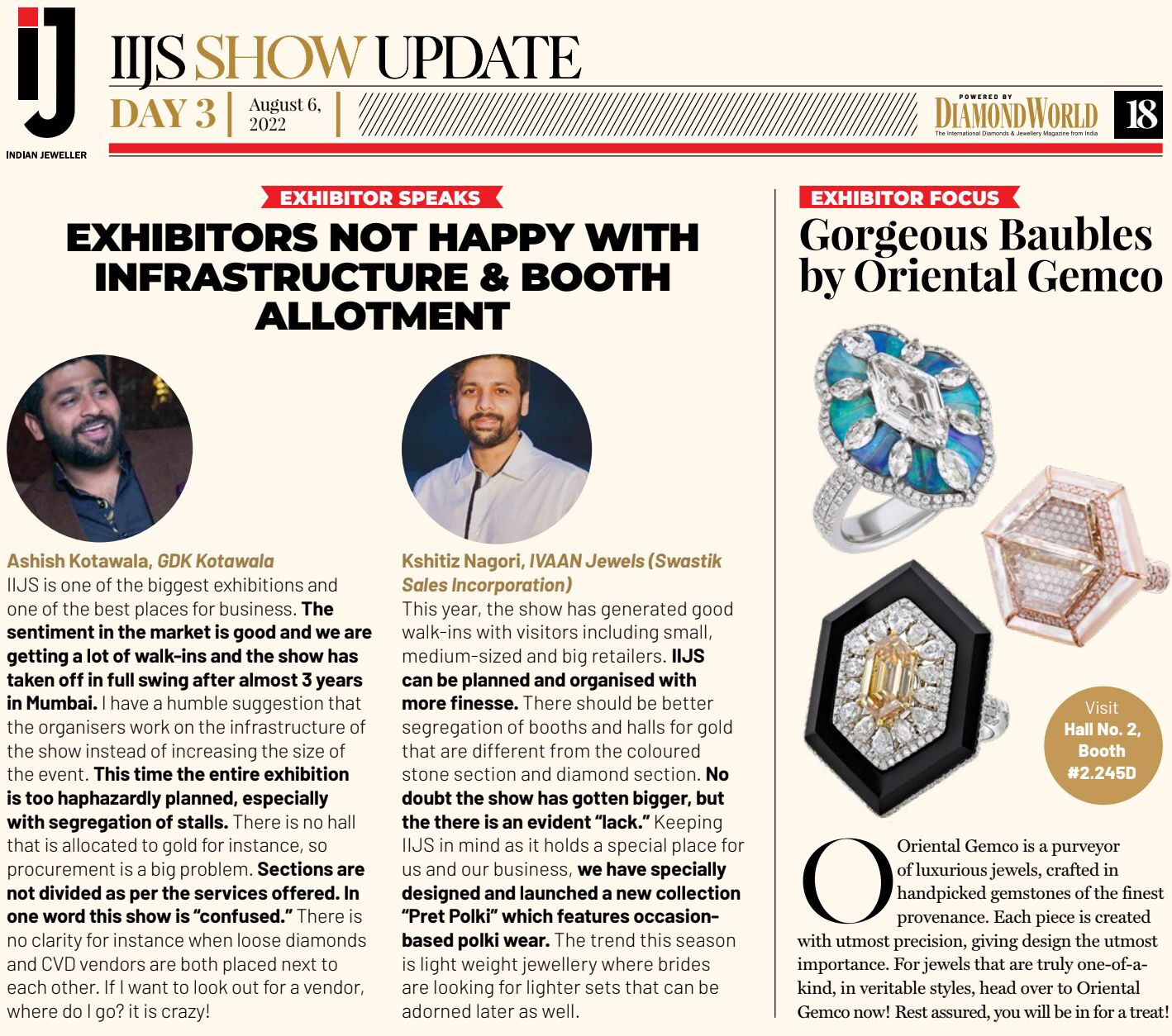
Ashish Kotawala -GDK Kotawala

Strengthening Connections at India’s Leading Jewellery Platform

Ashish Kotawala shares his experience at IIJS, highlighting the exhibition as one of the biggest platforms for business opportunities and industry connections.

With the market sentiment showing strong momentum, he appreciated the increasing participation and positive response from visitors. According to him, IIJS continues to play an important role in bringing together jewellers, manufacturers, and industry professionals on a single platform.

He also shared valuable insights on improving the exhibition experience through better infrastructure, clearer stall segmentation, and more organised planning to make the platform even more effective for exhibitors and visitors.

Strengthening Connections at India’s Leading Jewellery Platform

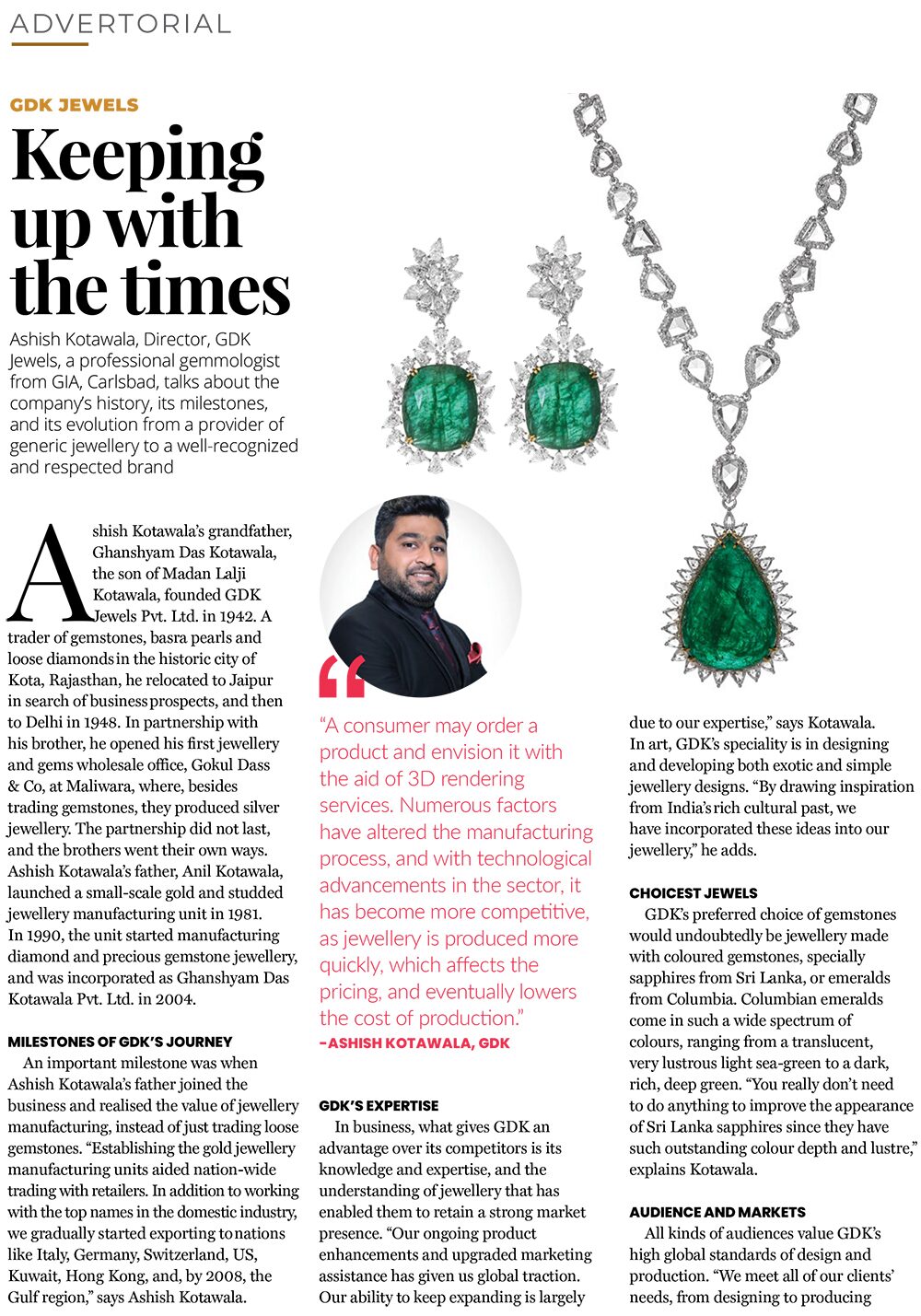
Ashish Kotawala -Director, GDK Jewels

A Legacy of Craftsmanship, Innovation & Excellence

Ashish Kotawala, a professional gemmologist from GIA, Carlsbad, represents the vision behind GDK Jewels’ evolution from a traditional jewellery business into a recognised and respected jewellery brand.

With a legacy dating back to 1942, GDK Jewels has grown through generations of expertise, craftsmanship, and innovation. Under Ashish’s leadership, the brand has expanded its presence by focusing on high-quality jewellery manufacturing, distinctive designs, and a deep understanding of gemstones.

Ashish believes that GDK’s strength lies in its expertise, continuous product innovation, and ability to create jewellery inspired by India’s rich cultural heritage while adapting to modern consumer preferences. The brand specialises in high-end bridal jewellery, coloured gemstone jewellery, and bespoke creations crafted with precision.

Embracing technology and modern manufacturing practices, GDK Jewels continues to combine traditional craftsmanship with advanced techniques like CAD/CAM and 3D visualisation to create refined jewellery experiences for clients.

Ashish’s vision is to establish GDK Jewels as a globally recognised design house, expanding across the jewellery industry while delivering distinctive designs, exceptional craftsmanship, and unmatched client experiences.

A Legacy of Craftsmanship

Ashish Kotawala - Continuing a Heritage of Excellence

A Legacy Built on Trust, Relationships & Modern Luxury

Ashish Kotawala represents the blend of heritage, trust, and modern leadership in the jewellery industry. Carrying forward a legacy built over generations, he focuses on preserving the core values of craftsmanship, relationships, and integrity while shaping the future of luxury jewellery.

His leadership approach is deeply rooted in the belief that strong relationships and trust form the foundation of long-term success. With a vision to evolve the brand while respecting its heritage, Ashish continues to bring together traditional jewellery expertise with contemporary ideas and modern luxury expectations.

Through his journey, Ashish Kotawala reflects the transformation of a legacy jewellery house into a brand that represents timeless craftsmanship, innovation, and meaningful experiences for modern consumers.

A Legacy of Craftsmanship

Entrepreneur India

Gemlead Programm @ IIMA

Gemlead Programm

Heritage

A Life Around Gemstones

What a jewellery family teaches you

My education in jewellery began with being around it. After school, I spent time at the family office, watching stones being selected and ideas becoming finished pieces. Design and manufacturing caught my attention early.

I wanted to understand how each decision changed the jewel. Some of the lessons that stayed with me had as much to do with people as gemstones. My father taught me to explain what a client was buying, make the disclosures and think about the relationship over time. He gave suppliers the same consideration. Their knowledge, their families and their place in the business mattered.

That way of working continues to shape my decisions. A client should feel comfortable asking questions, including difficult ones. A supplier should feel that their contribution is valued. Both relationships need attention long after an individual transaction.

And the excitement remains. When a parcel arrives, I still want to open it, examine the stones and imagine what we could create.

Learning to explain what you see

Being familiar with gemstones is one thing; helping someone else understand them is another. A buyer may see two attractive stones and wonder why I would recommend one over the other.

The conversation becomes useful when I can explain the qualities I am responding to and connect them to the buyer’s priorities.

That might mean discussing the colour they prefer, the shape that interests them or the reason a particular design feels more suitable. It also means being clear about anything that needs further verification. Knowledge should make the decision easier to understand, rather than make a client feel that they need to accept a recommendation without questions.

Relationships influence the finished jewel

A piece of jewellery carries the contribution of many people. Selecting the stone is one part of the process. Design, manufacturing and finishing bring their own decisions, and each person involved sees something from a different perspective.

The consideration my father showed suppliers helped me appreciate those relationships early. Listening to the people who work with the material is part of understanding what can be achieved with it. Respect for that contribution shapes how a piece develops and how problems are discussed along the way.

For a client, the most meaningful expression of that background is the quality of the conversation today: whether the jeweller listens carefully, explains clearly and remains willing to answer questions after the purchase.

The takeaway: Experience becomes valuable when it improves how you look, explain and act.

Questions to consider

  • Can your jeweller explain the decisions behind a recommendation?
  • Do you feel comfortable asking about limitations as well as strengths?
  • Is the conversation giving you a clearer understanding of the jewel?

Personal Advisory

The Person Before the Purchase

A recommendation begins with listening

Before I recommend a gemstone, I want to understand the person who will own it.

Why are they buying? What do they enjoy wearing? Is this a celebration, a first significant purchase or an addition to a collection?

The budget is useful, but it cannot answer those questions. The same amount can lead to very different choices depending on whether someone values colour, size, rarity or the experience of wearing a jewel every day.

Sometimes I show a few pieces simply to observe a reaction. A client may discover a preference they could not put into words at the beginning. Comparing stones helps us both understand what matters.

I think of the process as matchmaking. Occasionally, I see a gemstone and a particular client comes to mind immediately. The connection comes from knowing their taste.

My recommendation still needs to stand up to three questions: Is this a good gemstone? Is it right for this person? Does it offer value at the asking price? The client should understand my reasoning and feel comfortable with the decision.

Begin with the life the jewel will have

The purpose of a purchase gives the conversation direction. A piece intended for frequent wear raises different questions from one chosen for a particular celebration. Someone may want a jewel that feels familiar immediately; someone else may be looking for a striking departure from what they usually wear.

It helps to talk about existing favourites. What makes you reach for them? Is it their colour, their scale, the way they sit or the memories they hold? It is equally useful to discuss pieces that remain unworn. Sometimes those reveal a preference more clearly than a photograph of something you admire.

Turn a budget into a set of priorities

A comfortable spending range gives us a boundary within which to explore. The next step is to understand what deserves the greatest attention. One person may be willing to choose a smaller stone for a colour they love. Another may place more importance on the overall presence of the finished piece.

These preferences should be discussed openly. A useful comparison explains what changes between the options and why that difference might matter to you. If every quality is presented as equally important, the decision becomes harder rather than clearer.

Leave room for discovery

You do not need to arrive with every preference settled. Seeing a few carefully chosen options can help you identify what you enjoy. The purpose of a consultation is to make your taste clearer, so that the eventual choice feels considered and personal.

The takeaway: Define what you want from the jewel before deciding which jewel to buy.

Before your consultation

  • Identify the occasion and how you expect to wear the piece.
  • Think about the colours, shapes and jewellery you already enjoy.
  • Set a comfortable spending range.
  • Discuss which qualities matter most and where you are willing to compromise.

Coloured Gemstones

Beauty Is in the Stone

Looking beyond the name on the label

Colour usually draws me in first. I notice its depth, hue and tone, then the lustre, proportions and the way the cut brings the stone to life. I want to spend time looking at it.

Origin can be significant. It may contribute to a gemstone’s history, rarity and price. But I want to examine the individual stone before deciding what that origin means for the purchase. I have seen gemstones from less celebrated sources that I preferred to particular examples from famous ones.

The same applies to labels such as “precious” and “semi-precious.” Tourmalines offer an extraordinary range of colours and possibilities. Dismissing them because of a category means missing the opportunity to discover something beautiful.

Personality matters to me. Natural inclusions can be part of what makes a stone interesting, although their effect on appearance and durability needs consideration. The question is whether you understand and enjoy the complete stone.

When you wear a jewel, you experience its colour, light and presence. Those qualities deserve your attention.

Give your first impression some attention

When a stone catches your eye, try to identify what attracted you. You might enjoy its particular shade, the balance of its outline or the way it responds as you turn it. Describing that reaction makes comparisons more useful. Instead of asking only which stone is better, you can begin asking which qualities you prefer and why.

Looking at alternatives together can help. Take time to return to the first stone after seeing the others. Notice whether it still holds your attention once the novelty of the comparison has passed.

Put reputation in context

A celebrated origin can be part of a gemstone’s appeal, but it should lead to questions about the individual example in front of you. What information supports the stated origin? Which qualities are visible in this stone? How much does the origin matter to your own interest in owning it?

The same curiosity can open the door to unfamiliar varieties. If you begin with the colours and character you enjoy, you may find yourself drawn to a gemstone you had not originally considered. My interest in tourmalines reflects that willingness to look beyond familiar categories.

Understand character before accepting a compromise

Finding a stone interesting does not mean overlooking its limitations. If you notice an inclusion or a feature you do not understand, ask for an explanation.

Discuss its effect on appearance and whether it raises any concerns for the intended design or wear.

You should come away knowing both what you admire and what you are accepting. That understanding allows a preference to become a confident choice.

The takeaway: Understand what a label contributes, then look closely at the gemstone itself.

When comparing stones

  • View alternatives together where possible.
  • Ask to see them under different suitable lighting conditions.
  • Separate your response to their appearance from the appeal of their origin.
  • Discuss how inclusions affect both beauty and durability.

Gemology

The Report and the Eye

What verification brings to a beautiful first impression

A laboratory report provides important information about a gemstone.

Depending on the report and what can be determined, that may include identity, measurements, treatment findings and an opinion on geographic origin.

It cannot fully communicate the experience of seeing the stone. Two gemstones with similar descriptions can look and feel very different in person. How pleasing is the colour? How does the light move? Does the cut bring out its character?

These are complementary parts of the decision. Looking helps you understand appeal and suitability. Testing supports claims that appearance alone cannot establish.

I once bought an estate diamond without a report. My initial assessment differed slightly from what I later thought it might receive at the laboratory. When a client expressed interest, I explained both possibilities and made clear that we needed to wait for the result.

That distinction matters. An experienced assessment should be identified as an assessment. A laboratory finding should be presented as a finding.

Read the report alongside the gemstone

A report becomes more useful when someone takes you through its actual wording. Rather than relying on a general description such as “certified,” ask what has been examined, what conclusions have been recorded and which questions the document does not answer.

If a seller’s description uses stronger or more specific language than the report, that difference deserves clarification. You should be able to distinguish between a documented finding, a professional interpretation and a personal opinion about beauty.

Keep the purchasing questions separate

There are several decisions within a jewellery purchase. What is the gemstone? What is known about its treatment or origin? Do you like how it looks? Does the proposed design suit you? Are you comfortable with the asking price?

A single document should not be expected to answer all of them. The report supports the information within its scope. The consultation should connect that information to the actual stone and to your reasons for buying it.

Be clear about what is still pending

The estate diamond in my experience reinforced the importance of explaining uncertainty before a decision is made. If a laboratory result is pending, the client should know which parts of the discussion remain provisional.

This is also a useful habit for the buyer: ask what has been established and what still needs confirmation.

An attractive first impression can begin the conversation, while clear evidence helps you decide how to proceed.

The takeaway: Enjoy the first impression, then establish what the evidence supports.

Questions worth asking

  • Which laboratory issued the report, and what does it actually conclude?
  • What treatment information is available?
  • Which claims still need checking?
  • How do the documented characteristics relate to what you see and what you value?

Buying with Confidence

When the Right Advice Is to Wait

Looking beyond the excitement of a purchase

A large gemstone or an attractive price can create a powerful first reaction.

My responsibility is to help the client think about how they will feel once that excitement has settled.

A client once considered a substantial diamond and had already made an offer. Knowing their preferences, I felt its colour would eventually disappoint them. I recommended exploring a smaller stone with a colour they would enjoy more. They withdrew the offer.

That was advice for that person. Another buyer might have been comfortable with the same combination of qualities.

Waiting can also make sense when the asking price is difficult to justify. On another occasion, a client wanted matched diamonds for a festival. Available options were limited, and I thought the supplier’s premium was high. I explained why waiting could help.

The client understood and decided that wearing them for the occasion mattered more.

The final decision belongs to the buyer. Good advice makes the choices and compromises clear.

Recognise the compromise you will keep noticing

Every purchase involves priorities. The important question is whether the compromises fit the person making them. If colour is the quality you notice first, choosing primarily for size may leave you dissatisfied.

If the overall design matters most, a stone’s individual appeal may not be enough to make the finished piece right for you.

In the case of the substantial diamond, my concern came from knowing the client’s preferences. I was thinking about what they would continue to notice after the excitement of the offer had passed. A recommendation should be able to explain that connection.

Separate an occasion from urgency

A deadline can be meaningful. A festival, anniversary or family celebration may be an important part of why someone wants a jewel. It is reasonable for the buyer to place value on having it for that moment.

The conversation should still make the effect of timing clear. What is available now? Why is this option being recommended? Would the buyer prefer to consider alternatives if the occasion were not approaching?

With the matched diamonds, the client understood my concern about the premium and chose the occasion. That was an informed decision because the trade-off had been discussed.

Let waiting have a clear purpose

Waiting is useful when it gives you time to resolve a doubt, compare suitable options or reconsider your priorities. It should have a reason.

The aim is to reach a choice you understand, whether that means proceeding with the available jewel or allowing the search to continue.

The takeaway: A sound recommendation accounts for your preferences, the price and the timing.

Pause before committing

  • Are you responding mainly to size or an apparent bargain?
  • Is there a compromise you suspect will bother you later?
  • Have you considered suitable alternatives?
  • Do you understand what you gain or give up by waiting?

Design & Craftsmanship

Let the Gemstone Guide the Design

Knowing what to add and when to stop

When a gemstone interests me, I begin imagining the jewel it could become. Sometimes that idea stays with me for days. I consider arrangements, proportions and details, then return to the stone.

A Colombian heart-shaped emerald once inspired plans for a grand necklace. As we spent more time with it, the direction changed. We chose a delicate necklace with briolettes that kept attention on the emerald. Its crystal and lustre were so compelling that the design needed to give them room.

That process requires close work with designers and karigars. The matching of stones, the proportions of the setting and the quality of the finish all affect the result.

I enjoy pieces with presence, but presence can take different forms. A design should make sense for its gemstone and for the person who will wear it. Sometimes the most valuable adjustment is a small one.

Establish the centre of attention

A design conversation becomes clearer when we identify what should hold the eye. It may be the colour of the main gemstone, its unusual shape or the relationship between several stones. Once that intention is understood, the surrounding details can be considered in relation to it.

The heart-shaped emerald taught that lesson through the design process itself. The initial idea had grandeur, but spending more time with the stone led us towards a more delicate composition. The emerald gave us a reason to reconsider the scale around it.

Imagine the piece on its wearer

A drawing can help communicate an idea, but the discussion should also address how the jewel will be experienced. Where will a pendant sit? Does the scale feel right for the person? How does the piece relate to the clothes and other jewellery they expect to wear with it?

These questions help turn an attractive concept into a personal object. A client should feel able to explain what seems too large, too delicate or unfamiliar, even when the design is still developing.

Look closely at the details

The contribution of designers and karigars becomes visible in the relationships between the parts: the placement of stones, the balance of the setting and the finish of the completed piece. Details that seem small in isolation can influence the overall impression.

For me, refinement means returning to the original intention and asking whether each element supports it. A design is ready when its choices feel coherent - when the gemstone, the craftsmanship and the wearer belong in the same conversation.

The takeaway: Each design decision should contribute to the beauty and wearability of the finished jewel.

During a design conversation

  • Identify the feature you want the design to emphasise.
  • Discuss scale and how the piece will sit when worn.
  • Ask how the setting relates to the stone’s characteristics.
  • Review the details of craftsmanship and finish.

A note on integrity

Sometimes the best jewel is the one you advise a client not to buy.

How understanding a client’s preferences led Ashish Kotawala to recommend reconsidering a significant purchase.

The Situation

A client was considering a 55-carat diamond. Attracted by its substantial size and price, they had already made an offer. In his interview, Ashish recalls that the diamond was M colour - a characteristic he believed would not align with the client’s preferences over time.

The Challenge

The client’s initial enthusiasm centred on the diamond’s size and perceived value. Ashish’s concern was that, once this excitement settled, its colour would become a source of dissatisfaction.

The challenge was to help the client reconsider a purchase they were already emotionally invested in. This required explaining the compromise clearly and relating it to their personal expectations.

Ashish’s Approach

Ashish assessed the choice through his understanding of the client’s taste. He believed that accepting less carat weight in favour of a colour they preferred would lead to greater enjoyment.

He recommended exploring smaller diamonds and explained why their colour preferences deserved greater consideration. His advice was specific to this client: the same combination of size, colour and price could appeal to another buyer.

The conversation gave the client an opportunity to look beyond the immediate attraction and consider what would matter during ownership.

The Outcome

The client withdrew their offer and began exploring diamonds in the 40- to 50-carat range, seeking a closer match to their expectations.

The immediate outcome was a more focused search, with greater emphasis on the balance between size and preferred colour. The interview does not record a subsequent purchase.

The Key Learning

This experience illustrates the importance of understanding the person behind a purchase. A gemstone can command attention while still involving a compromise that its prospective owner may find difficult to accept.

By raising that concern before the client committed, Ashish helped them make a more considered decision - one guided by the qualities they were likely to enjoy over time.